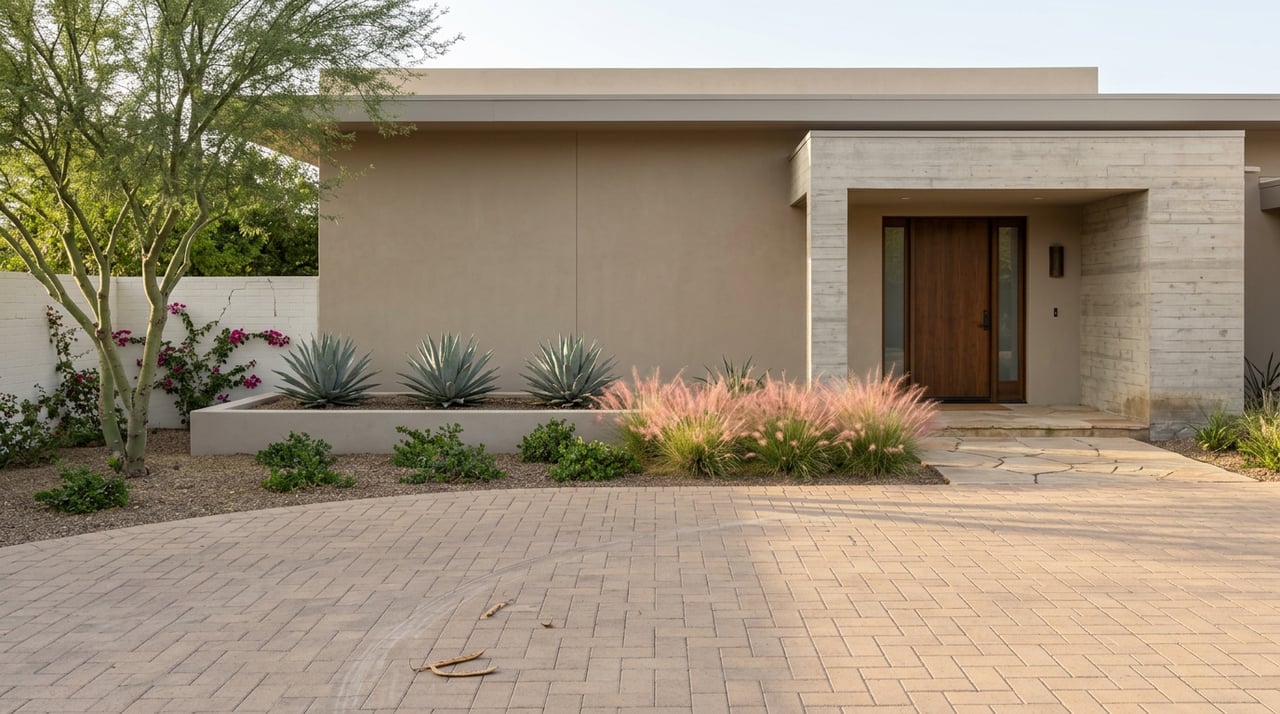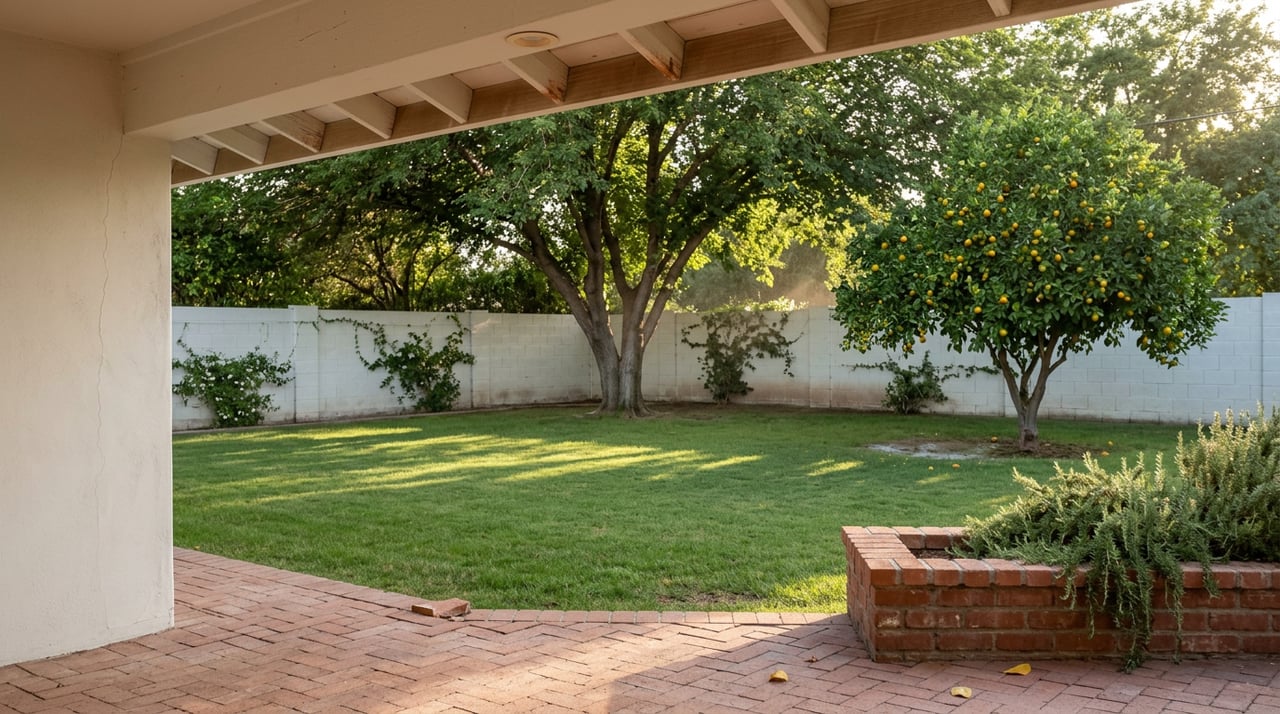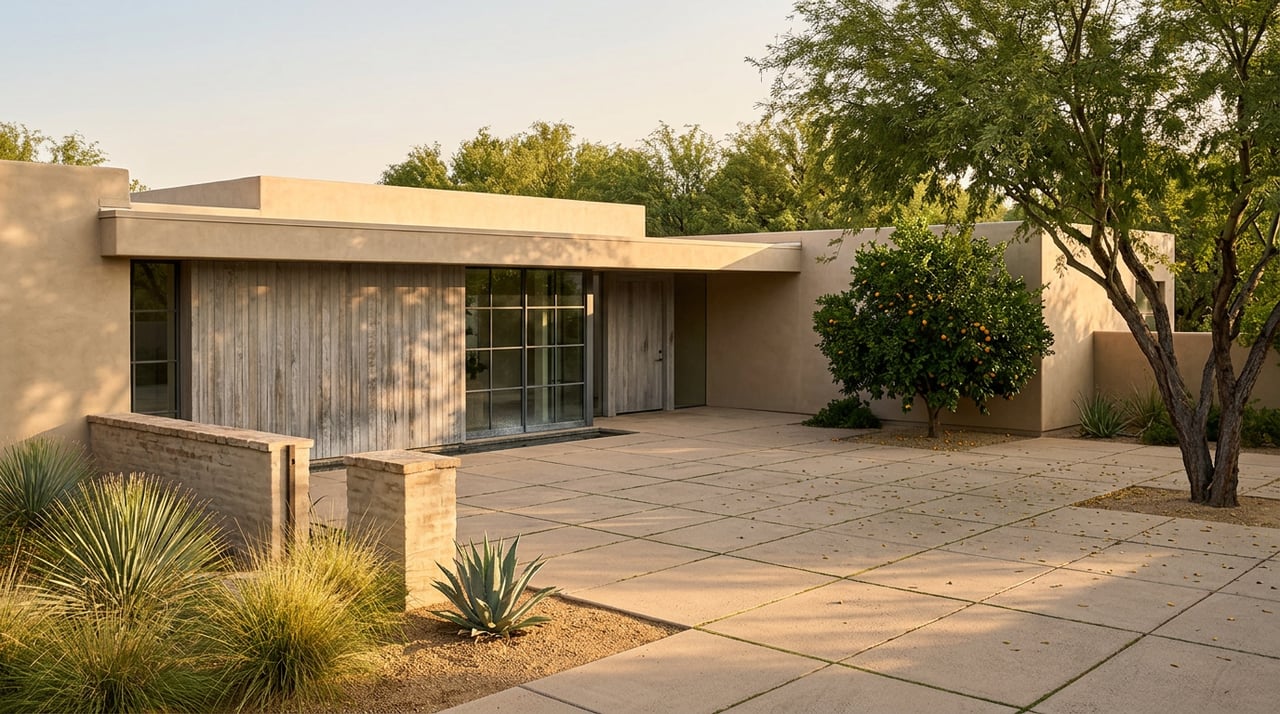
It is a familiar story in Arcadia. A buyer closes on a Lower Arcadia rebuild. Citrus trees, a fresh irrigation system, the Camelback Mountain view everyone pays for. Then August comes around and the family finds out their kids are zoned for Madison, not Hopi. Nobody lied to them. Nobody hid anything. They just never asked which side of a line their new address sat on, because nothing about the house, the street, or the listing photos told them a line was there at all.
That story is the whole Arcadia market in miniature. Buyers walk in comparing square footage, lot size, and finish quality, because that is how real estate usually prices itself. Arcadia does not work that way. The single biggest driver of what a parcel sells for here is not the house sitting on it. It is which side of an invisible boundary that parcel happens to fall on, and in 2026 that boundary is worth more than a full kitchen remodel.
Four Markets Wearing One Zip Code
Ask for "the Arcadia median" and you will get an answer that hides more than it reveals. Closings in ZIP 85018 through June 2026 came in at a median sale price of $1,545,000 across 79 transactions, up 1.8 percent year over year, at roughly $618 per square foot. That single number is doing the work of describing four completely different markets stacked inside the same boundary.
Original-condition homes, concentrated in Arcadia Lite west of 56th Street, trade from about $920,000 to $1.35 million. Renovated ranches on quarter-acre irrigated lots, the heart of resale activity, run $1.35 million to $2.55 million. Tear-down rebuilds with custom architecture occupy $2.55 million to $4.55 million. Trophy estates on premium view lots clear $4.55 million and run past $9 million.
A buyer shopping the $1.5 million median could be looking at a dated three-bedroom that needs everything, or a fully rebuilt showpiece that just happens to sit on a smaller lot. The median tells you almost nothing about which one you are getting. What tells you something is the boundary the specific parcel sits inside, because that boundary decides which of the four tiers a house is even allowed to compete in.
The Boundary Nobody Puts in the Listing
Arcadia's school assignment splits roughly along 56th Street. Addresses to the east generally fall in Scottsdale Unified. Addresses to the west feed into Madison Elementary and Phoenix Union. That line has nothing to do with a home's condition, age, or price point on paper, and everything to do with what a buyer with school-age kids will actually pay for it.
This is exactly the gap that catches buyers off guard. Two houses can sit on the same street, built by the same custom builder, finished to the same standard, and one commands a real premium because of a school-district line that runs down the middle of the block. Confirming which attendance zone a specific parcel falls into, directly with the district rather than trusting a listing description, is not optional due diligence in Arcadia. It is the difference between two different offers on what looks like the same house.
The zip code line matters just as much. Arcadia's official boundary sits inside 85018. One street over, in 85008, homes carry the same citrus canopy, the same mature shade trees, and views of the same mountain, at a fraction of the price. As of June 2026, the typical home value in that adjacent zip sat near $378,780, down slightly from the year before, with roughly two-thirds of that month's sales closing below list price. Same trees. Same mountain. A different line on the map, and a completely different negotiating position.
What the Data Won't Agree On
Even the professionals tracking Arcadia can't settle on which direction the market is moving, and that disagreement is itself useful information. One national portal's most recent tracking this summer showed Arcadia's price per square foot at $490, down close to 17 percent from the year before. A separate report built from actual closed transactions through June 2026 put price per square foot at $618, essentially flat to slightly up.
Both can be technically accurate at the same time, because they are measuring different slices of the same overlapping tiers described above. A month heavy on original-condition sales in Arcadia Lite pulls the average per-square-foot number down. A month with a couple of trophy-estate closings pulls it back up. With roughly 3,400 single-family homes in the entire neighborhood and monthly closing counts in the double digits, a handful of transactions can swing the headline number in either direction. Anyone quoting you a single Arcadia statistic without naming the month and the segment behind it is quoting you noise.
The inventory data tells a more consistent story than the price-per-square-foot fight does. Active listings in Arcadia have grown noticeably over the past year, days on market have stretched toward the mid-70s, and more than half of single-family listings have already taken at least one price reduction. Sellers are still closing around 95 percent of list price on average, which is not a market in retreat. It is a market where buyers finally have room to ask questions before they write an offer, which is precisely the room a buyer needs to sort out which tier and which side of which line they are actually buying into.
The View You Can't Insure Against
There is one more piece of Arcadia friction worth understanding before you write an offer, and it has nothing to do with schools or zip codes. Arcadia has no neighborhood-wide HOA governing lot coverage or view corridors. That is part of what makes the neighborhood feel the way it does, with no architectural review board dictating what gets built next door. It also means a buyer paying a premium for a mountain view today has no mechanism to stop a neighbor from breaking ground on a rebuild tomorrow that erases it entirely.
This is not a reason to avoid Arcadia. It is a reason to look at adjacent lots, not just the one you are buying, before you factor a view into your offer price. A premium paid for a sightline that depends entirely on a neighbor's future plans is a different bet than a premium paid for square footage.
What You're Actually Paying For
Put the pieces together and the thesis holds up cleanly. The Arcadia premium is not primarily a house premium. It is a location-inside-a-location premium, built from a school-attendance line, a zip code boundary, and a tier system that a single median price cannot show you. Two buyers can pay wildly different amounts for what looks, from the street, like the same neighborhood, and both can be paying a fair market price for what they actually bought once you account for which side of which line their parcel sits on.
That is the question worth asking before you tour another Arcadia listing. Not "what did this sell for," but "which Arcadia is this, exactly, and which lines does it sit inside."
A Few Questions Worth Asking Before You Offer
Is Arcadia currently a buyer's market or a seller's market? Neither, cleanly. Renovated homes under roughly $2.5 million still draw multiple offers when priced correctly, while original-condition and attached inventory carry real negotiating room. The answer depends on which tier you are shopping, not on the neighborhood as a whole.
Should I trust the median price I see for Arcadia online? Treat it as a starting point, not an answer. With roughly 3,400 homes in the neighborhood and monthly closing counts in the double digits, a single trophy sale or a cluster of entry-level closings can move the published median in either direction within a month.
Does the school attendance zone really change what a house is worth? It changes who is competing for it, and buyers with school-age kids consistently price that difference into their offers. Confirm the assigned school district directly with Scottsdale Unified or the relevant Phoenix district for the specific address before you factor schools into your decision, since attendance boundaries can and do shift.
Arcadia rewards buyers who ask about the boundary before they fall for the canopy. If you are trying to figure out which tier, which zone, and which side of which line actually fits your budget and your priorities, Cambridge Properties can walk the specific block with you before you write the offer, not after.