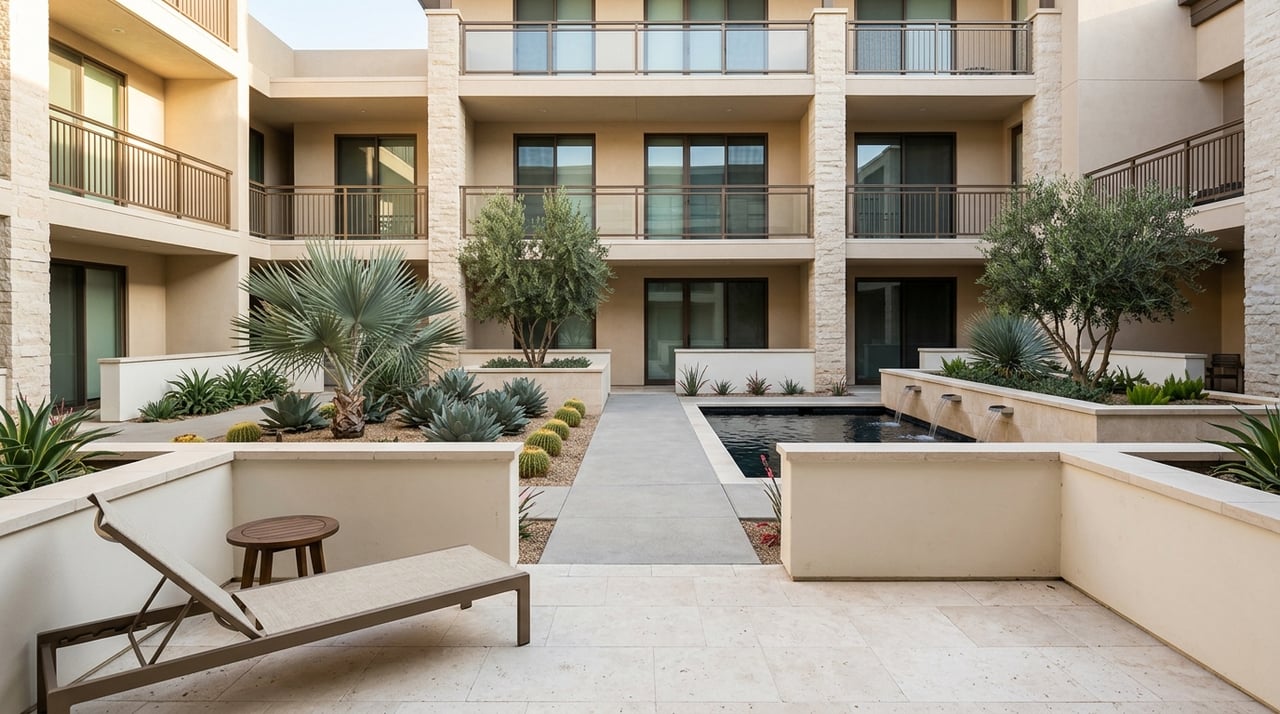
If you are drawn to the Arizona Biltmore area, you are probably not just looking for a place to live. You are looking for a low-maintenance home in a central Phoenix setting that feels polished, established, and connected to resort-style surroundings. This guide will help you understand how condo and townhome living works in Arizona Biltmore Estates, what to compare from one property to the next, and how this area stacks up against other luxury options nearby. Let’s dive in.
Why Arizona Biltmore stands out
The Arizona Biltmore area sits within Phoenix’s Camelback East village, an area the city describes as having mixed housing types, strong resort influence, and a large share of homes built between 1950 and 1970. That mix helps explain why the Biltmore feels different from a typical condo corridor. It blends established residential communities with a well-known resort setting in central Phoenix.
The Arizona Biltmore itself is a historic Phoenix landmark and one of the city’s official Points of Pride. The property dates to 1929 and is recognized for its gardens, pools, and Frank Lloyd Wright-influenced architecture. For many buyers, that history adds character and identity that newer low-maintenance communities may not offer.
The surrounding amenity base is also unusually deep. Current resort materials identify seven pools, four hot tubs, golf, spa and fitness facilities, dining, and on-site activities. The location is also less than 20 minutes from Phoenix Sky Harbor, with convenient access to Downtown Phoenix and Old Town Scottsdale, which supports the area’s appeal for buyers who want centrality with a resort backdrop.
What condo and townhome living means here
In the Biltmore area, low-maintenance living can take more than one form. Some properties are condominiums, while others may function as planned communities with townhome-style ownership. That distinction matters because Arizona law treats condominiums and planned communities differently.
A condominium generally involves separate ownership of an individual unit, with common elements owned collectively. A planned community is a mandatory-membership development with assessment authority. If you are comparing two properties that seem similar on the surface, their ownership structure can affect governance, fees, records, meeting rules, and how shared responsibilities are handled.
That is why it helps to think beyond the neighborhood name. In Arizona Biltmore Estates, the better question is not simply, “Is this in the Biltmore?” It is, “How is this property structured, what does the association manage, and how does that fit the way I actually want to live?”
Start with the HOA structure
When you compare condo and townhome options, the homeowners association should be one of your first checkpoints. Arizona law requires open meetings for condominium and planned-community associations and makes association records reasonably available to members. That gives buyers an important window into how a community is run.
A well-run association can shape your day-to-day experience just as much as the floor plan or exterior style. Monthly costs, upkeep expectations, renovation approvals, and use restrictions often flow through the HOA framework. In a resort-adjacent market like the Biltmore, those details can have an outsized impact on convenience.
Documents to review
Before you move forward on a property, ask to review the core association documents. These materials can help you understand not only the rules, but also how the community plans for future maintenance and decision-making.
Key items to review include:
- CC&Rs or declaration
- Bylaws
- Rules and regulations
- Current budget
- Reserve funding information
- Recent meeting minutes
- Parking rules
- Pet rules
- Rental rules
- Renovation or architectural approval rules
These documents can reveal whether a building or enclave fits your needs. If you travel often, lease seasonally, work from home, or plan to remodel, this step is especially important.
Questions to ask about maintenance
Low-maintenance living can mean different things in different communities. In one property, the HOA may handle substantial exterior upkeep. In another, you may still have meaningful owner responsibilities.
Ask clear questions such as:
- What exterior elements does the HOA maintain?
- What costs are covered by assessments?
- Are roofs, landscaping, exterior walls, or shared systems included?
- What owner responsibilities remain?
These answers can help you compare true lifestyle convenience, not just headline dues.
Know which amenities are actually included
One of the biggest points of confusion in the Biltmore area is the difference between nearby amenities and owned amenities. Because this district is shaped by a major resort and golf presence, buyers should confirm what the association actually owns and maintains versus what is operated separately.
That distinction matters. A property may sit near resort features, golf, or wellness offerings, but proximity is not the same as bundled ownership or guaranteed access. If amenities are important to your decision, ask whether they are shared, leased, private, or independently operated.
Resort adjacency versus resort access
This is where many Biltmore properties become highly appealing, but also where careful comparison matters most. Some buyers want the feel of a resort neighborhood with less concern about direct amenity rights. Others want a very specific access pattern that supports daily routines, entertaining, or lock-and-leave convenience.
A practical question to ask is simple: does this property offer resort adjacency or actual resort-linked access? The answer can shape both value and expectations.
Historic character may come with review rules
The Arizona Biltmore’s architectural identity is part of what makes the area distinctive. At the same time, buyers should know that certain properties may be historically designated or subject to historic-preservation review.
Phoenix’s Historic Preservation Office reviews exterior changes for listed properties. That means architectural pedigree can come with additional approval steps for future updates. If design flexibility matters to you, this is worth confirming early in the process.
That does not make a property better or worse. It simply means the ownership experience may include another layer of review, especially for exterior modifications.
How Biltmore compares to nearby luxury areas
Many buyers looking at Arizona Biltmore Estates are also weighing Arcadia, North Central Phoenix, or Scottsdale. These areas can all appeal to luxury buyers, but they offer different living patterns.
The Biltmore is best understood as the most resort-forward option of the group. It combines central Phoenix access with a planned-community feel and strong resort adjacency. That can be especially attractive if you want a polished, low-maintenance home with a hospitality-style backdrop.
Biltmore versus Arcadia
Arcadia is a close geographic comparator, but the housing identity is different. Phoenix planning history describes the original Arcadia tract as a large-lot area developed with citrus-orchard-style homesites. As a result, Arcadia tends to feel more single-family, landscape-oriented, and lot-driven than the condo and townhome mix around the Biltmore.
If you want more land and a stronger emphasis on lot size and traditional neighborhood form, Arcadia may align with that preference. If you want a more lock-and-leave format, the Biltmore often offers a different path.
Biltmore versus North Central Phoenix
North Central Phoenix is more preservation-focused in its planning identity. The North Central Avenue Special Planning District emphasizes large lots, generous setbacks, scenic-corridor protection, and design standards that preserve its large-lot single-family character.
In practical terms, North Central generally competes on neighborhood continuity and architectural form rather than on resort-style multifamily amenities. If your priority is low-maintenance ownership with strong resort surroundings, Biltmore may feel more aligned.
Biltmore versus Scottsdale
Scottsdale is often the strongest comparator for buyers who want a broader urban-center lifestyle. The city highlights Old Town’s large collection of restaurants, shops, and art galleries, along with the McDowell Sonoran Preserve’s extensive trail system.
Compared with Biltmore, Scottsdale offers a larger citywide retail and dining ecosystem. Biltmore, by contrast, tends to feel more concentrated and resort-defined, which can be a better fit if you want central Phoenix convenience without stepping into a more expansive urban-commercial setting.
The best questions to ask before you choose
When you narrow your search, focus on the questions that reveal how a property really lives day to day. Price and finish level matter, but ownership structure, rules, and upkeep often define long-term satisfaction.
Use this checklist as a practical starting point:
- Is the property legally a condominium or a planned community?
- Does it function more like a condo building, a townhome enclave, or a resort-lifestyle hybrid?
- What exactly do the monthly assessments cover?
- Are amenities owned by the association or operated separately?
- How transparent is the association with records and meetings?
- Are there parking, leasing, pet, or remodeling rules that affect your intended use?
- Is the property historically designated or subject to preservation review?
- Do you want direct resort adjacency, or would a larger-lot neighborhood be a better fit?
The right answer usually comes down to your real routine. If you travel often, want simplified upkeep, value central access, and like the feel of a resort-connected setting, Arizona Biltmore condo or townhome living can be a very compelling match.
A smart way to evaluate fit
In this market, the word “luxury” can mean different things from one property to the next. One buyer may define luxury as convenience, service, and low exterior maintenance. Another may care more about privacy, lot size, or a broader urban lifestyle.
That is why the smartest approach is to compare governance, maintenance, setting, and amenity structure together. In Arizona Biltmore Estates, those factors often tell you more than branding alone. When you understand how the property is organized and what daily ownership really looks like, you can choose with more confidence.
If you want help comparing high-end condominiums, townhomes, and resort-adjacent opportunities in Metro Phoenix, Cambridge Properties offers senior-led guidance shaped by deep local market insight and a polished, consultative approach.
FAQs
What makes Arizona Biltmore condo and townhome living different?
- Arizona Biltmore condo and townhome living stands out because it combines central Phoenix access, a historic resort backdrop, mixed housing types, and a strong low-maintenance lifestyle appeal within Camelback East.
What should you review before buying a Biltmore condo or townhome?
- Before buying a Biltmore condo or townhome, review the ownership type, CC&Rs, bylaws, rules, budget, reserve funding, meeting minutes, and any parking, pet, rental, or remodeling restrictions.
Why does ownership type matter in Arizona Biltmore properties?
- Ownership type matters because Arizona law treats condominiums and planned communities differently, which can affect governance, assessments, records access, and how common areas are managed.
Are resort amenities included with every Biltmore-area property?
- No. In the Biltmore area, some amenities may be owned and maintained by an association, while others may be operated separately by a resort, golf club, or private entity.
Can historic rules affect a Biltmore property?
- Yes. If a property is historically designated or subject to historic-preservation review, exterior changes may require additional review by Phoenix’s Historic Preservation Office.
How does Arizona Biltmore compare with Arcadia, North Central, and Scottsdale?
- Arizona Biltmore is generally the most resort-forward option, Arcadia is more lot- and landscape-oriented, North Central is more preservation-conscious, and Scottsdale offers a broader urban-commercial experience.